When parents first hear the words "Gestalt Play Therapy," most of them pause.
Gestalt what?
It sounds clinical. Maybe even a little intimidating. And yet, once I explain what actually happens in a Gestalt Play Therapy session, the response I hear most often is: "Oh. That actually makes so much sense."
If your child is struggling with big emotions, ADHD, autism, anxiety, or behaviors that feel impossible to understand, this post is going to walk you through exactly what Gestalt Play Therapy is, how it works, and why it might be the missing piece your family has been looking for.
What Is Gestalt Play Therapy?
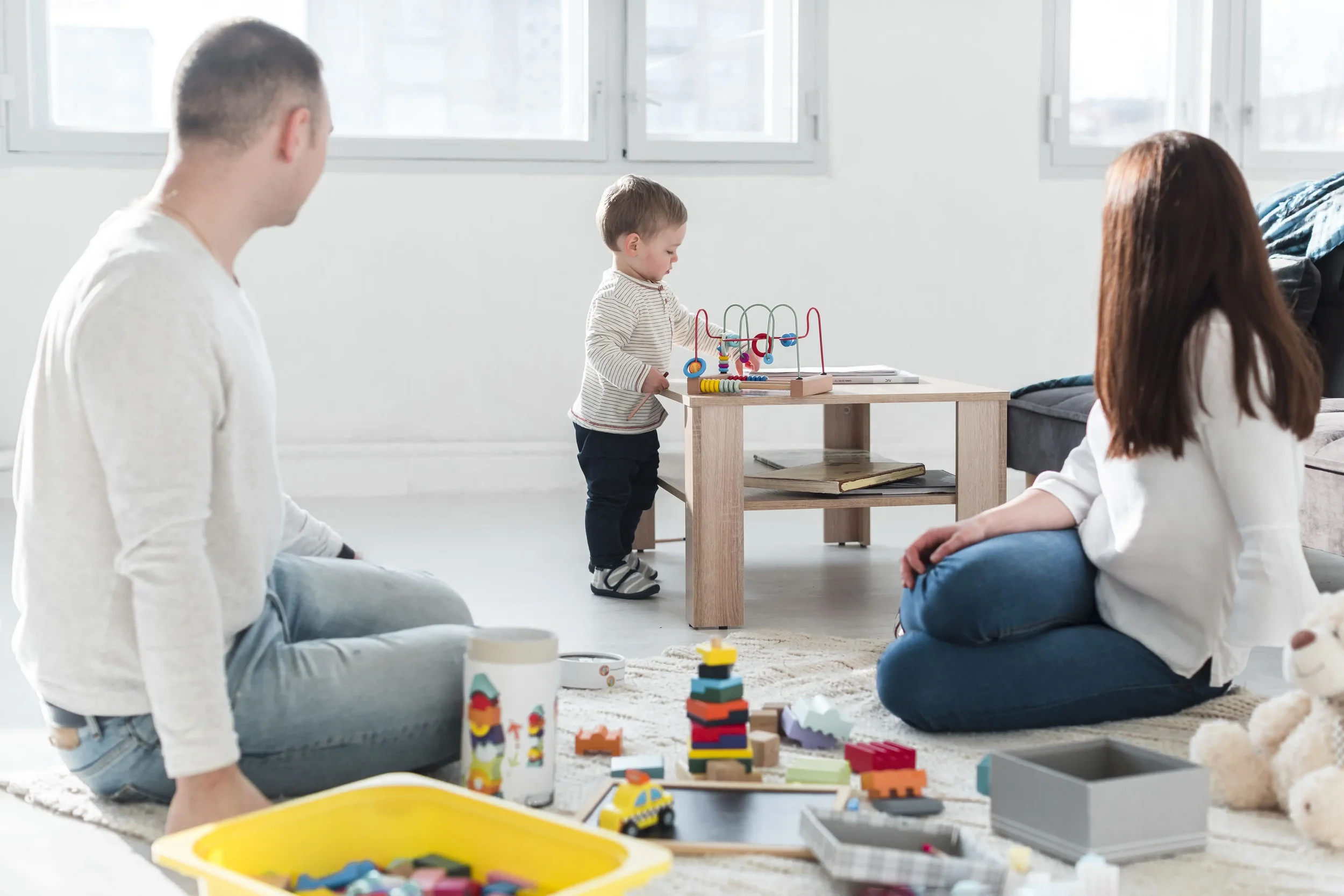
Gestalt Play Therapy is a creative, experiential, and deeply child-centered form of therapy that combines the principles of Gestalt therapy with the natural language of childhood: play.
It was developed by Violet Oaklander, a pioneering therapist who believed that children needed more than talk therapy to heal. They needed to experience healing, through their bodies, their senses, their imagination, and their play.
At its core, Gestalt therapy is about the "here and now." Rather than spending sessions analyzing the past or worrying about the future, Gestalt Play Therapy focuses on what the child is experiencing right now, in this moment, in this room. What does their body feel? What are they noticing? What does this drawing, this puppet, this story in the sand tray tell us about what's happening inside them?
The goal, as Oaklander described it, is something called "integrated aliveness," a state where a child can process their experiences, understand their needs, and move through emotions without getting stuck or shut down.
The principles behind Gestalt Play Therapy come from the broader Gestalt therapy tradition. According to Psychology Today, Gestalt therapy is a humanistic approach that focuses on helping clients become aware of what they are experiencing in the present moment rather than analyzing events only through the past. The approach views individuals as whole beings integrating body, mind, and emotions and often uses experiential activities such as role-playing, artistic expression, or movement to help clients understand their feelings and behaviors in real time.
These principles translate beautifully into work with children. Because many children cannot yet articulate complex emotions verbally, creative and sensory experiences allow them to process feelings in a developmentally natural way.
How Is Gestalt Play Therapy Different From Other Play Therapy?
This is one of the most common questions parents ask, especially if they've already heard of child-centered play therapy or Adlerian play therapy.
Here's a simple way to think about it.
Child-centered play therapy follows the child's lead almost entirely, with the therapist creating a safe, reflective space and allowing the child to direct everything that happens. It's non-directive and built on unconditional positive regard.
Adlerian play therapy focuses on social connections, the child's sense of belonging, and how they relate to their family and community. It tends to involve more interpretation and goal-setting around social behavior.
Gestalt Play Therapy sits in its own space. It is more active and directive than traditional child-centered play therapy, but the direction comes from following what the child is experiencing in their body and senses in the present moment. The therapist joins the child, on the floor, at their level, and uses creative tools to help the child become aware of what they're feeling and what they need. Self-awareness, personal responsibility, and emotional regulation are always the destination, but we get there through imagination, movement, and sensory experience rather than conversation.
What Actually Happens in a Gestalt Play Therapy Session?
This is where parents usually lean in a little closer.
Gestalt Play Therapy sessions look different from what most people picture when they think of "therapy." There's no couch. There's no clipboard. There's no child sitting across from an adult answering questions about their feelings.
Instead, you'll find clay. Sand trays. Drawing and painting. Puppets. Music. Movement. Storytelling. Role-playing. Sensory exploration.
These aren't just fun activities to keep a child busy. Each of these tools is carefully chosen to help a child access and express what they can't yet put into words. A tower built in the sand tray becomes a story about feeling unsafe. A puppet takes on a voice the child doesn't yet feel safe using as their own. A piece of clay gets pounded with a kind of relief that no amount of talking could have unlocked.
The therapist's role is to stay present, curious, and attuned, noticing what the child's body is communicating, reflecting it back gently, and helping the child connect the dots between their inner experience and outer behavior. The therapeutic relationship, that safe and trusting connection between therapist and child, is considered essential to the entire process.
Is Gestalt Play Therapy Good for ADHD?
Yes, and here's why it makes particular sense for ADHD brains.
Gestalt Play Therapy is rooted in sensory-based, present-moment experience. For children with ADHD, who often struggle to sit still, stay regulated, or engage through traditional talk-based approaches, this model meets them exactly where they are. Sessions involve movement, creativity, and hands-on exploration, which naturally support engagement and regulation for kids whose nervous systems need more input, not less.
Research has shown that Gestalt group work as a method of intervention has had a positive effect on disruptive behavior related to ADHD, with improvements across core behavioral characteristics. While group and individual settings differ, the underlying principles translate: when a child feels engaged, understood, and safe in their body, their behavior begins to shift.
Is Gestalt Therapy Good for Autism?
Gestalt therapy is particularly well-suited to working with neurodivergence, including autism, because there is no requirement for a child to show up in any particular way. The therapy adapts to them, not the other way around.
This matters enormously in the context of autism. So much of what autistic children experience in therapeutic and educational settings involves being asked to conform, to suppress natural responses, to mask who they are in order to fit a neurotypical mold. Gestalt Play Therapy takes the opposite approach entirely. It asks: what is this child experiencing right now? What do they need? How can we create a space where they feel safe enough to show us?
The holistic nature of Gestalt work, addressing the whole child through senses, body, emotions, and intellect, means that sensory needs are honored rather than managed away. The pace, the tools, and the direction of sessions can all be shaped around an autistic child's unique wiring.
The Core Principles Behind Gestalt Play Therapy
Even if the techniques sound unfamiliar, the principles underneath them are ones most parents will immediately recognize as what they've been wanting for their child all along.
The "Here and Now" is central to everything. Gestalt Play Therapy doesn't spend sessions rehashing the past or projecting into the future. It focuses on what the child is experiencing right now, building self-awareness from the inside out.
A Holistic Approach means that the whole child is considered in every session, not just their behavior, not just their diagnosis, not just the presenting "problem." Their body, senses, emotions, and intellect are all part of the picture.
The Therapeutic Relationship is foundational. A child cannot do this kind of vulnerable, exploratory work without feeling genuinely safe with the person in the room with them. Building that relationship comes before anything else, and it remains at the center of the work throughout.
Why Don't More Therapists Use Gestalt Play Therapy?
It's a fair question, and one worth addressing honestly.
Gestalt Play Therapy requires specialized training that goes beyond a general therapy license. Therapists need to be comfortable following a child's lead through non-verbal, sensory, and creative modalities rather than defaulting to structured talk-based sessions. The lack of rigid structure can feel unfamiliar to clinicians trained primarily in more directive, protocol-driven approaches.
There's also the reality that Gestalt Play Therapy asks a lot of the therapist in terms of presence, attunement, and creativity. It's relational, dynamic, and responsive rather than scripted. That's exactly what makes it so powerful for children, and exactly what makes it less common.
What Can Gestalt Play Therapy Help With?
Children who work in Gestalt Play Therapy develop the capacity to process experiences they don't yet have words for, understand their own needs and feelings, and return to calm after overwhelm more easily and quickly. Over time, parents typically notice fewer explosive or withdrawn moments, more confidence in social situations, a stronger sense of self, and a child who feels genuinely understood rather than constantly corrected.
Gestalt Play Therapy can be especially helpful for children navigating ADHD, autism, anxiety, sensory processing differences, trauma, behavioral challenges, and social difficulties.
Play Is Not "Just Playing"
I want to close with this, because I believe it matters.
When parents first hear that their child's therapy involves clay and puppets and sand, it can be tempting to wonder if it's serious enough. If it's really doing anything.
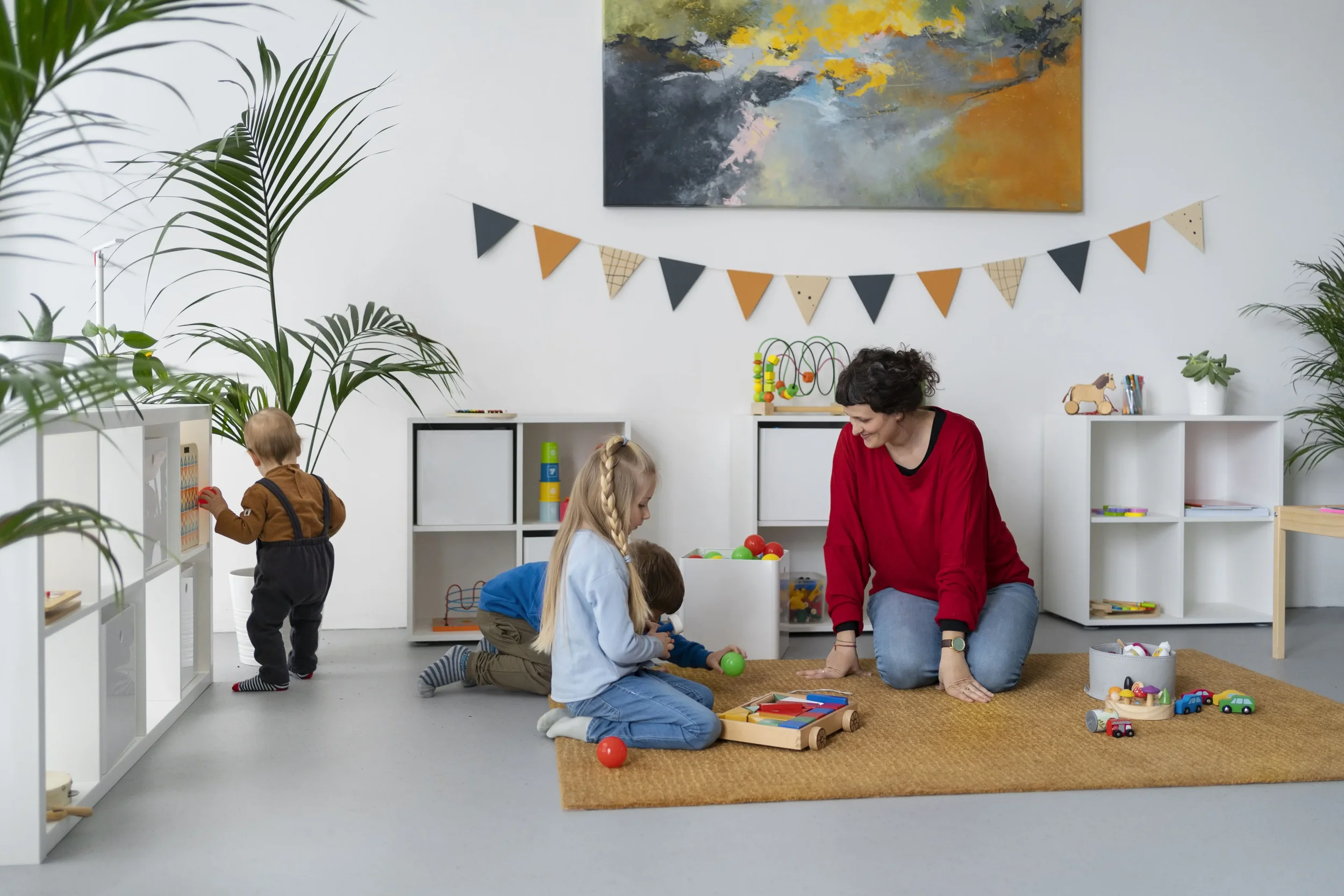
Play is the language of childhood. It is how children process experiences, make meaning, express feelings, and build resilience long before they have the words for any of it. In the playroom, a tower is never just a tower. A story is never just a story. And a child who finally feels safe enough to play freely is a child who is doing some of the most important work of their life.
That's what Gestalt Play Therapy makes possible.
Ready to Learn More?
If you're in San Diego or anywhere in California and you're wondering whether Gestalt Play Therapy might be the right fit for your child, I'd love to talk. I offer a free consultation so we can explore what's going on for your family and figure out together what support makes the most sense.
You don't have to have it all figured out before you reach out. That's what the consultation is for.
[SCHEDULE A FREE CONSULTATION]
Sherri Hubbard, LMFT is a Licensed Marriage and Family Therapist (LMFT #95950) and trained Gestalt Play Therapist specializing in neurodiversity-affirming therapy for children, teens, and adults in San Diego and throughout California via telehealth. Accepting Aetna and MHN/HealthNet. Private pay options available.
FAQ
1. What is Gestalt Play Therapy in simple terms?
Gestalt Play Therapy is a child-centered therapy that helps children process emotions through play, art, movement, and sensory experiences rather than traditional talk therapy.
2. How is Gestalt Play Therapy different from regular play therapy?
It is more experiential and present-focused. The therapist actively helps the child build awareness of feelings and body sensations in the moment.
3. Does Gestalt Play Therapy help with ADHD?
Yes. It supports regulation through movement, sensory tools, and creative engagement, which aligns well with ADHD nervous systems.
4. Is Gestalt Play Therapy appropriate for autistic children?
Yes. It adapts to the child rather than asking them to mask or conform, honoring sensory needs and authentic expression.
5. How long does Gestalt Play Therapy take to work?
Every child is different, but parents often notice improvements in emotional regulation, confidence, and behavior over time as safety and awareness increase.